Engineering Variety and Stability in Mobile Slot Games: Developer Approaches to Features and Payouts
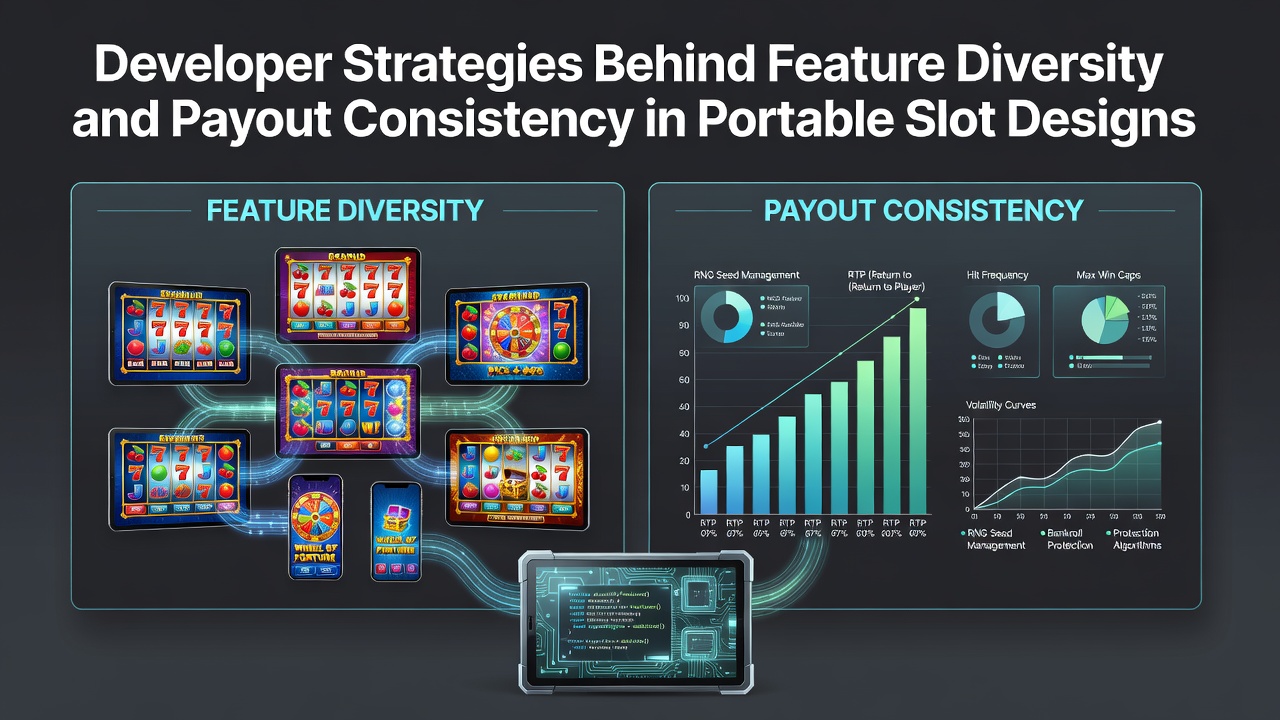
Portable slot development requires careful coordination between creative teams and mathematical specialists who work to deliver varied gameplay elements while maintaining reliable payout structures across different devices and player sessions, and in June 2026 this balance remains central to how studios structure their release schedules. Developers achieve feature diversity through modular design systems that allow rapid integration of new mechanics such as cascading reels, expanding wilds, and interactive bonus rounds without disrupting core payout algorithms.
Teams often begin by mapping potential features against existing return-to-player frameworks, which ensures that additions like multiplier trails or symbol transformations integrate smoothly rather than skewing overall performance metrics. Research from the Nevada Gaming Control Board shows that regulatory testing protocols increasingly examine these integrations for consistency across portable platforms, where screen size and processing power vary significantly between devices.
Modular Frameworks for Feature Expansion
Studios rely on reusable code libraries that separate visual and interactive components from the underlying random number generation engines, and this separation allows designers to introduce fresh themes or bonus structures while preserving the same probability tables that govern base game outcomes. Engineers test each new module through extensive simulation runs that model millions of spins before any title reaches certification, which helps identify potential conflicts between features and payout stability early in the process.
One approach involves layering features in tiers, where basic additions like stacked symbols sit alongside more complex elements such as progressive multipliers that activate only under specific conditions, and this tiered method spreads risk across different parts of the game cycle. Data from industry analyses indicate that titles built with these layered systems show more consistent performance across regions with varying regulatory requirements, including those monitored by Canadian provincial authorities.
Mathematical Modeling for Payout Consistency
Consistency in payouts depends on precise calibration of hit frequencies and volatility indexes, which developers adjust through iterative modeling that factors in both short-term session results and longer-term statistical averages. Specialists use Monte Carlo simulations to forecast how feature combinations affect return distributions, ensuring that mobile versions deliver comparable experiences to desktop counterparts despite hardware limitations.
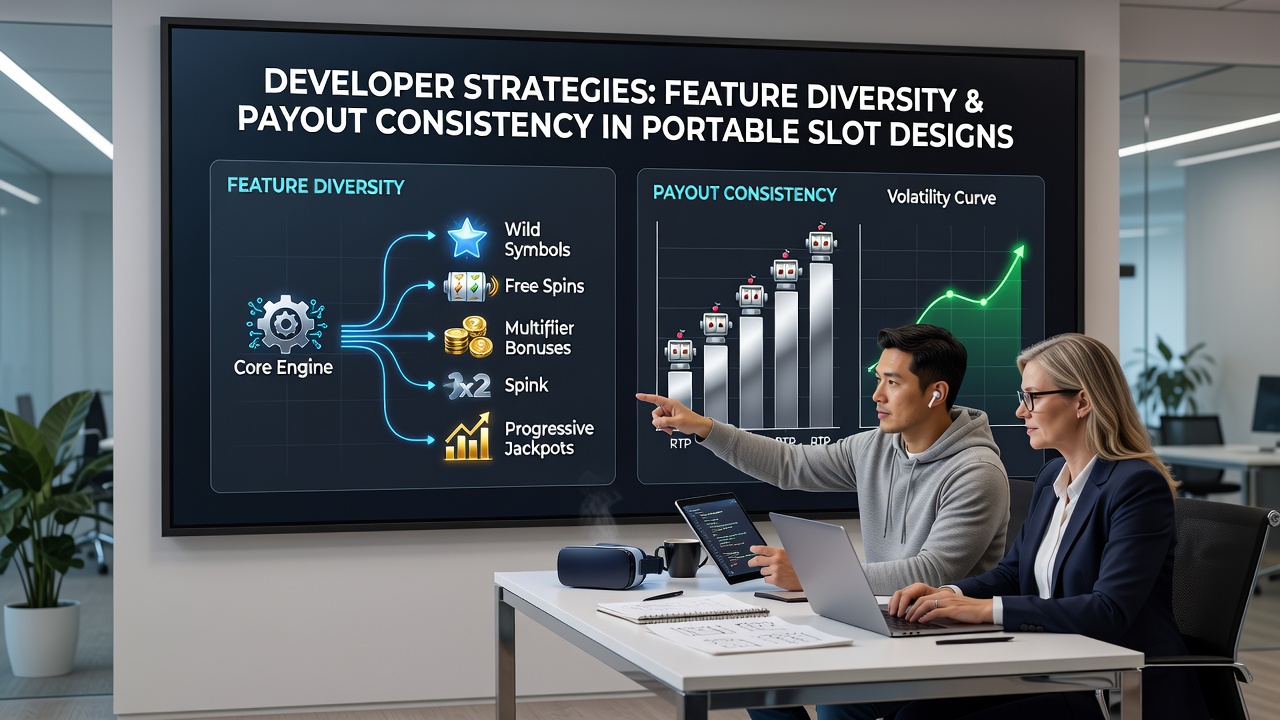
Adjustments often include dynamic scaling of bonus trigger rates based on device type, although the core random number generator remains unchanged to satisfy certification standards. Studies conducted by the University of Sydney's Gambling Research Unit reveal that such scaling techniques help maintain player engagement metrics without altering the fundamental payout percentages that regulators review during approval processes.
Cross-Platform Testing and Optimization
Portable slot designs undergo rigorous device-specific testing that examines how features render on smartphones and tablets while verifying that payout calculations remain identical regardless of operating system or connection speed. Developers run parallel simulations on multiple hardware profiles to detect any variances introduced by graphics rendering or input latency, then refine code paths accordingly.
Collaboration between creative and analytics teams allows for rapid iteration when test data highlights imbalances, and this collaboration supports the release of titles that incorporate diverse mechanics such as hold-and-spin rounds or symbol collection systems without compromising return stability. Figures from the Australian Communications and Media Authority demonstrate that markets with strict portability standards have seen increased adoption of these optimized development pipelines in recent years.
Balancing Innovation with Regulatory Compliance
Regulatory frameworks across multiple jurisdictions require documentation of how each feature interacts with payout mechanisms, which pushes developers to maintain detailed audit trails during the design phase. Teams document every adjustment to probability tables or bonus activation thresholds, creating records that support both internal quality checks and external reviews by certification laboratories.
What's notable is how these documentation practices also feed into post-release monitoring, where live performance data informs future updates that preserve feature appeal while correcting any drift in payout patterns. Observers note that studios maintaining such records achieve faster approval cycles for subsequent portable releases, particularly when expanding into new geographic markets with distinct technical specifications.
Conclusion
Developer strategies for portable slots center on integrated systems that support creative expansion alongside rigorous mathematical oversight, and these systems continue to evolve as device capabilities advance and regulatory expectations shift. Through modular construction, simulation-driven calibration, and comprehensive testing protocols, studios deliver titles that present varied experiences while upholding consistent return characteristics across platforms and player sessions.